
Living Room Redesign
Living room redesign visualizes seating, lighting, storage, and color changes using a photo of your current living space.
Living Room Redesign examples
AI-generated examples. Use these prompts as a starting point; your results will vary.
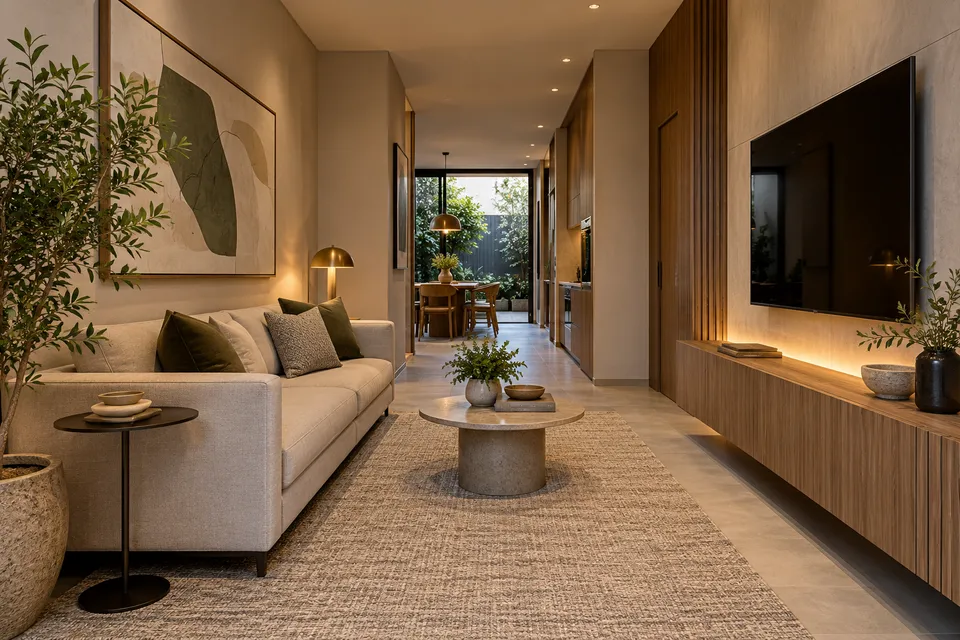
Photorealistic architectural design visualization: Narrow living room with slim sofa, wall television and open walkway. Realistic perspective, wide composition, no people, no text, no watermark.
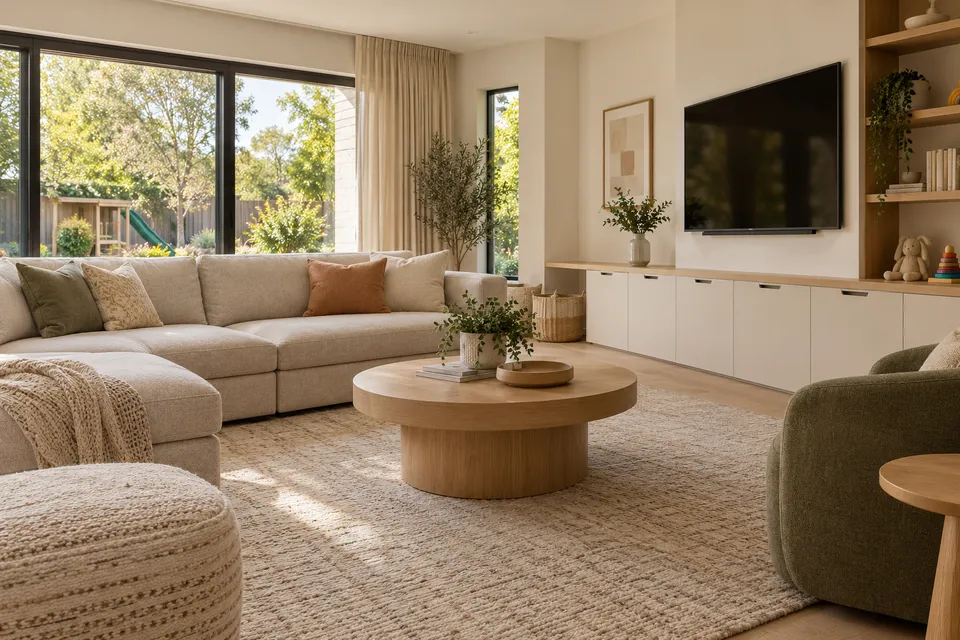
Photorealistic architectural design visualization: Family living room with washable sofa, rounded table and closed toy storage. Realistic perspective, wide composition, no people, no text, no watermark.
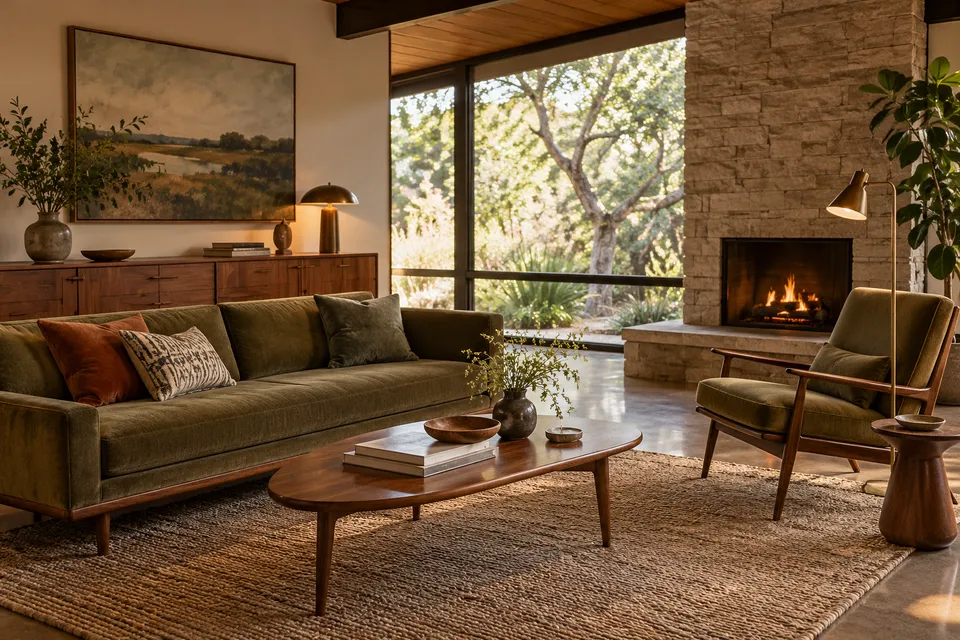
Photorealistic architectural design visualization: Warm midcentury living room with walnut furniture, reading lamp and olive armchair. Realistic perspective, wide composition, no people, no text, no watermark.


Empty room → staged listing.
We restyle a room you already furnished. Collov furnishes an empty one — the shot that actually sells a listing — and does the jobs a free tool won’t touch.
- Stage empty rooms for listings
- Remove the furniture that’s already there
- Twilight exteriors & lawn replacement
- Commercial licence · no hourly limit
How to try living room redesign
Photograph the whole space
Begin with how people move through your living room.
Describe what must stay
Keep the existing structure visible. Use the notes to name fixed features and the changes you want to compare.
Compare and check your concept
Generate a version, compare it with your photo, and measure the actual space before buying materials or furniture.
Practical tips for living room redesign
Begin with how people move through your living room. Photograph the seating area and include doorways, the television or fireplace, and any route to a balcony or kitchen. The most useful redesign keeps a clear passage through the room while giving seats a sensible relationship to one another. Describe the sofa you are keeping and whether the room is mainly for conversation, television, children, or reading.
For a narrow room, ask for shallow furniture and an open walking route instead of a larger sectional. For a family room, specify washable upholstery, rounded table corners, and closed toy storage. For a room centered on conversation, try facing chairs and a rug that connects the seating group. Lighting also needs layers: a ceiling fitting alone does not replace a reading lamp beside the chair where someone actually sits.
Compare layouts before choosing small decorative objects. Keep the same photo while trying a light neutral palette, warm wood, or a restrained midcentury scheme, so you can judge what changed. A visualization is useful for mood, proportion, and furniture ideas, but it is not a measured furniture plan. Verify television sightlines, radiator access, sofa dimensions, and door swings in the real room. Download your preferred image, then turn it into a practical shopping list that includes measurements as well as colors and materials.
Explore other spaces
Plan another room using your own photo.
Kitchen Redesign
Kitchen redesign uses a photo of your existing kitchen to visualize new cabinets, surfaces, lighting, and finishes before renovation.
Free AI Virtual Staging
AI virtual staging adds furniture and decor to a room photo so sellers and agents can show how an empty space might be used.
Home Office Design
Home office design turns a photo of your workspace into a furnishing concept with a desk, storage, lighting, and a clearer working layout.
Living Room Redesign questions
Can I keep my existing sofa?
Mention its color, approximate size, and position in the notes. Ask the generator to retain it, then check whether the result actually does.
What helps a narrow living room?
Try shallow seating, fewer freestanding tables, and a clear route between doors. Measure the remaining walking space before purchasing furniture.
Can I compare television and conversation layouts?
Generate separate versions from the same photo: one with seating facing the TV and another with seats facing each other. Check sightlines in both.